Camels are among the most economically and culturally significant animals in the Arabian Peninsula, Central Asia, and North Africa. A single prize racing camel in the UAE can be valued at over $1 million USD, while breeding herds in Saudi Arabia, Qatar, and Oman represent generational wealth passed down through families. Yet despite this immense value, the technology used to monitor and protect these animals has historically lagged far behind other livestock sectors. In 2026, that gap is closing rapidly — driven by advances in GPS miniaturization, cellular IoT networks, and real-time cloud platforms.
This guide covers everything a camel owner, racing professional, or livestock manager needs to know about GPS tracking technology: how it works, what to look for, the unique challenges of desert environments, and how modern IoT platforms like SENTRICK™ are redefining livestock security across 190 countries.
1. Why Camel Tracking Is Uniquely Challenging
Unlike cattle or sheep that typically graze within fenced pastures, camels are built for long-distance travel. A healthy adult dromedary can cover 40 to 60 kilometers per day in search of water and vegetation. In desert environments, this means a herd can disappear over the horizon within hours. Traditional herding methods — relying on experienced shepherds, bell collars, and physical fencing — are increasingly inadequate for large-scale operations.
The desert environment itself presents severe technical challenges. Extreme heat (surface temperatures exceeding 70°C in summer), fine sand infiltration, and vast distances from cellular towers all stress standard consumer GPS devices beyond their operational limits. A tracker designed for urban pet use will fail within weeks in a Rub' al Khali environment.
| Challenge | Consumer GPS | Industrial IoT (SENTRICK™) |
|---|---|---|
| Operating Temperature | Up to 45°C | Up to 85°C rated |
| Battery Life | 1–7 days | Up to 90 days (low-power mode) |
| Desert Sand Resistance | IP54 (splash only) | IP67 full dust/water submersion |
| Cellular Fallback | No | 4G → 2G → store & forward |
| Geofence Alerts | Limited | Unlimited zones, instant SMS/app |
| Remote Herd View | Single device | Unlimited animals, live map |
2. How GPS Tracking Technology Works in Desert Environments
Modern livestock GPS trackers operate using a combination of three core technologies: Global Navigation Satellite Systems (GNSS), cellular data networks, and low-power microcontrollers. The GNSS receiver — which can use GPS (USA), GLONASS (Russia), Galileo (Europe), or BeiDou (China) signals simultaneously — determines the device's precise location to within 2–5 meters. This location data is then transmitted via 4G LTE (or 2G fallback) to a cloud server, where it becomes visible on a real-time map accessible from any smartphone.
In remote desert areas where cellular coverage is absent, advanced trackers use a "store and forward" mechanism: GPS coordinates are logged locally on the device's memory and uploaded in bulk the moment connectivity is restored. This ensures no location data is lost even during multi-day treks through coverage dead zones.
Power management is the most critical engineering challenge. A tracker updating every 15 seconds will drain most batteries within 24–48 hours. Industrial solutions solve this through adaptive tracking intervals: the device updates frequently when motion is detected, and switches to a low-power "heartbeat" mode (updates every 5–30 minutes) when the animal is stationary. Combined with large-capacity batteries (5,000–10,000 mAh) and optional solar charging panels integrated into collar designs, operational lifespans of 30–90 days between charges are achievable.
3. Camel Racing: How GPS Is Transforming the Sport
Camel racing is a multi-billion dollar industry across the UAE, Saudi Arabia, Qatar, Kuwait, Bahrain, and Oman. The sport has undergone a technological revolution over the past decade, with robotic jockeys replacing human riders and sophisticated telemetry systems monitoring animal performance. GPS tracking is now central to both race management and training optimization.
During training, GPS data allows trainers to analyze a camel's speed profile across different terrain types, identify optimal pacing strategies, and detect early signs of fatigue through changes in movement patterns. Combined with heart rate sensors and accelerometers — now integrated into advanced collar systems — trainers can build a comprehensive physiological profile of each animal, enabling data-driven decisions about race readiness and recovery protocols.
Security is equally important. Prize camels are high-value targets for theft. GPS geofencing — which triggers an immediate alert if an animal leaves a designated area — has become standard practice at elite racing stables. When a camel exits its designated paddock at 2 AM, the owner receives an instant notification on their phone within seconds, not hours.
4. What to Look for in a Camel GPS Tracker
Not all GPS trackers are suitable for camels. The following specifications are non-negotiable for desert livestock applications:
Desert sand is extremely fine and abrasive. A device rated only for splash resistance (IP54) will fail within weeks. IP67 means the device can be fully submerged in 1 meter of water for 30 minutes — sufficient for sand and rain protection.
Desert temperatures swing from freezing nights to extreme daytime heat. Consumer electronics are typically rated to 45°C. Industrial-grade devices maintain full functionality across the full desert temperature range.
Using GPS alone provides coverage but can struggle in canyons or dense terrain. Devices that combine GPS + GLONASS + Galileo achieve faster lock times and more accurate positioning in challenging conditions.
Coverage maps look complete on paper but have significant dead zones in practice. A device that automatically falls back from 4G to 2G — and stores data when offline — ensures continuous tracking.
The ability to draw custom geographic boundaries and receive immediate SMS or app notifications when an animal crosses them is the single most valuable feature for theft prevention and herd management.
5. IoT Networks for Large-Scale Herd Management
For operations managing hundreds or thousands of camels, individual GPS trackers are only part of the solution. The real value comes from integrating tracking data into a centralized IoT management platform. Modern platforms allow operators to view all animals simultaneously on a live map, set automated alerts for unusual behavior patterns, generate movement history reports, and export data for veterinary analysis.
Emerging applications include AI-powered anomaly detection: algorithms that learn each animal's normal movement patterns and flag deviations that may indicate illness, injury, or distress. A camel that normally covers 30 km per day but has been stationary for 12 hours in an unusual location triggers an automatic welfare alert — enabling early veterinary intervention that can prevent serious health complications.
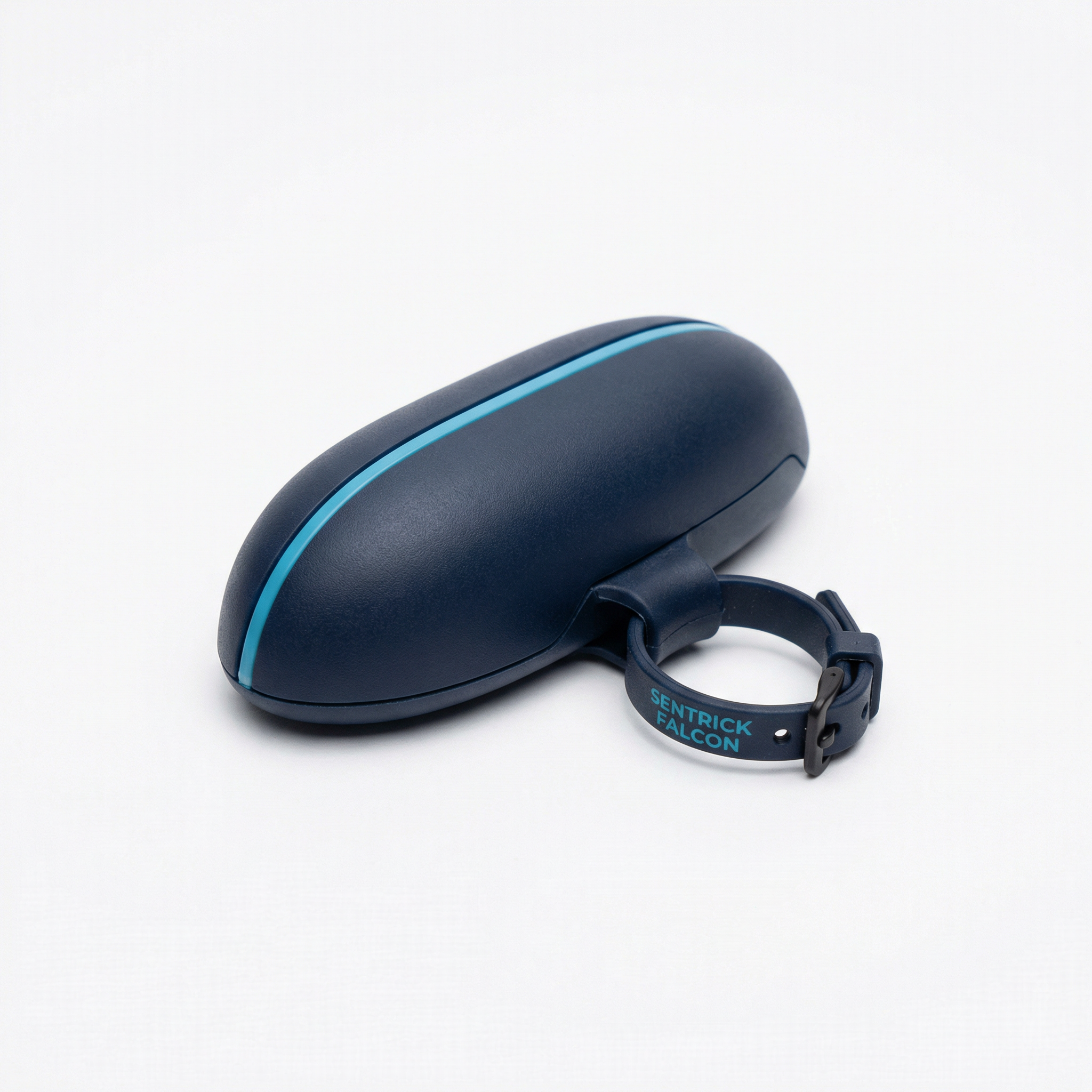
The SENTRICK™ platform supports unlimited devices on a single account, with a unified dashboard accessible from iOS, Android, and web browsers. All data is encrypted end-to-end and stored with 99.9% uptime guarantees — critical for operations where livestock represent millions of dollars in assets.
6. Regional Considerations: UAE, Saudi Arabia, and Beyond
The Arabian Peninsula represents the world's most sophisticated camel tracking market. The UAE's Al Ain Camel Market and the King Abdulaziz Camel Festival in Saudi Arabia — which offers prize money exceeding $57 million — drive demand for the highest-specification tracking technology available. Owners at this level require not just GPS location but comprehensive telemetry: heart rate, temperature, activity levels, and real-time health monitoring.
Beyond the Gulf, significant camel populations exist in Australia (over 1 million feral and domestic camels), Somalia, Ethiopia, Sudan, India, and Pakistan. Each market has distinct requirements: Australian station managers need long-range satellite connectivity where cellular networks don't exist, while East African pastoralists need ultra-low-cost devices with multi-year battery life.
SENTRICK™ operates across all major cellular networks in 190 countries, with automatic SIM switching to ensure connectivity regardless of which network has the strongest signal in any given location. This global coverage makes it the only tracking solution that works seamlessly whether a camel is in Dubai, Riyadh, Nairobi, or Adelaide.
Frequently Asked Questions
SENTRICK EQUINE™ uses a specially designed adjustable collar with padded inner lining, tested for animal welfare compliance. The collar is fitted around the neck and secured with a tamper-evident buckle. Installation takes under 5 minutes and requires no tools.
Yes. When cellular connectivity is unavailable, the device stores GPS coordinates locally and uploads them automatically when signal is restored. No location data is lost during offline periods.
Up to 30 days with 15-second GPS updates. In low-power mode (5-minute updates), battery life extends to 90 days. Optional solar charging panels are available for extended field deployments.
Yes. The SENTRICK™ platform supports unlimited animals on a single account. You can view all animals simultaneously on a live map, set individual geofences, and receive per-animal or group alerts.
SENTRICK EQUINE™ is designed in consultation with veterinary specialists. All materials are non-toxic and hypoallergenic. The device emits no harmful radiation and has been independently certified as safe for livestock use.